



Multi-Unit Franchising UK: Scale Multiple Locations
Going from one unit to five means moving from local operator to regional owner. Here's the framework, the capital, and the structure that makes it stick.
Growing a franchise business to five or more locations in the UK means moving from local operator to regional owner. Multi-unit franchising lets you scale several locations using a proven brand and playbook - but it comes with clear requirements and risks. You need the right development agreement, enough capital for several sites, and a management structure that protects service levels even when you're not on the shop floor.
Key Takeaways
- Multi-unit agreements define how fast you grow, where you can open, and what happens if one unit fails. Understanding area development, sequential, and master deals gives you a clear framework before committing serious capital.
- Capital exposure rises sharply per location. Five sites can quickly mean £1.25m+ total commitment. Underestimating cash flow is the #1 reason multi-unit franchises stall.
- A layered management structure makes scale possible. Owner → area manager → store managers turns five sites into a network rather than five jobs.
- Brand consistency is the long-term moat. SOPs, audits, and cloud accounting protect standards across every location.
The Five Pillars of Multi-Unit Success
With these pillars in place, multi-unit franchising becomes a repeatable model rather than a gamble on each new store.
What Is Multi-Unit Franchising?
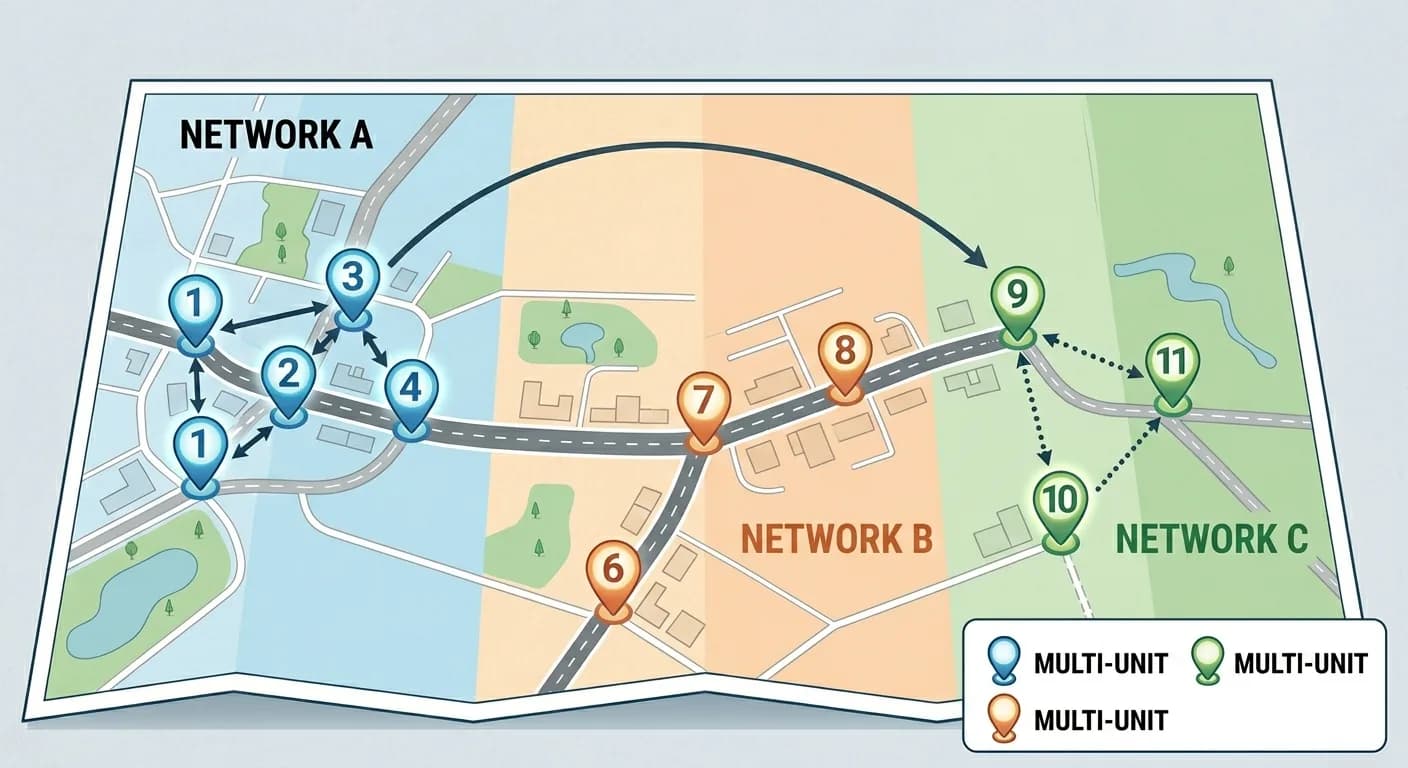
Multi-unit franchising means one franchisee operates several locations of the same brand across a defined area. Instead of working as a hands-on owner in a single store, you step into a regional role and manage a network of managers. You focus on strategy, numbers, and people, while trained teams run day-to-day operations.
According to the British Franchise Association, a rising share of UK franchisees now control more than one unit, reflecting how common this model has become. Your growth route is shaped by the agreement you sign with the franchisor.
| Factor | Area Development | Sequential | Master / Regional |
|---|---|---|---|
| Best fit for | Well-funded operators wanting fast growth | Owners recycling profits between sites | Highly experienced operators |
| Growth schedule | Fixed timetable per unit, hard deadlines | Indicative timetable, more flexibility | Wider region (e.g. all of Scotland) |
| Territory | Exclusive, minimum number of sites | Agreed unit by unit | Whole region, may include sub-franchising |
| Capital demands | High commitment up front | Match investment to cash from earlier units | Substantial - often partner-backed |
| Risk points | Missed build deadlines = penalties or loss of rights | Cross-default may still link units | Sub-franchisee performance affects you |
⚠️ Watch the cross-default clauses
Cross-default wording can mean a failure in one unit places your whole network at risk. Rights of first refusal over nearby territory, and the terms on which you can sell one unit or the whole group, matter a great deal once your network has real value. Independent legal advice is essential before signing either type of deal.
How Much Capital Do You Need to Scale to 5+ Locations?
Scaling a franchise to five or more UK locations almost always requires seven-figure investment. Typical total start-up costs per site - including fit-out, equipment, fees, and early working capital - often fall between £250,000 and £750,000, depending on sector and property. Multiply that by five and your overall exposure can quickly exceed £1.25m.
Franchise fees and fit-out costs are usually lower on later units, yet the cash still leaves your account months before new sites break even. That's why experienced operators stress-test their plan under pessimistic scenarios - delayed openings, slower sales, or unexpected refurb costs.
Financing and Liability Structuring
Funding several sites usually means mixing personal capital with outside finance. Many UK banks (Lloyds, HSBC, NatWest) have dedicated franchise teams that lend against proven brands with strong trading history. The British Business Bank also backs loan schemes that can help fill funding gaps.
Lenders look more favourably on multi-unit operators who already run one successful site, because they can see local trading data. At the same time, they expect careful risk management. That's why many multi-unit franchisees set up a separate limited company for each location (a special-purpose vehicle), so problems in one store don't immediately affect the others.
Royalties usually sit between 4-8% of gross sales, with brand marketing fees adding 1-3%. Across five locations that's a large monthly outflow - common cash-flow tactics include staggering supplier payments, ring-fencing reserves per unit, and setting age-appropriate profit targets per site.
Building a Management Structure That Scales Without You
A network of five+ locations cannot rely on you visiting every store each day. Building a structure that scales means replacing personal presence with clear roles, agreed targets, and reliable reporting. Your job shifts from serving customers to leading managers.
"Franchising works best when owners follow the system and focus on building people." - International Franchise Association
Clear reporting routines support the structure. Weekly trade calls, simple dashboards, and consistent KPIs make it possible to spot trends across the group. When performance dips in one store, you or your area manager can act quickly with extra coaching, local marketing, or staffing changes.
Career Ladder: Why Multi-Unit Beats Single-Site for Talent
Multi-unit groups have a real advantage when it comes to careers. You can offer visible progression that single-store operators simply can't match.
This ladder keeps ambitious staff engaged and reduces the constant cost of recruitment. Real-world operators also build a bench of trained supervisors ready to step into manager roles, run cross-site training days so teams see best practice elsewhere, and tie bonuses to both customer experience scores and sales results.
When demand spikes in one location or sickness hits another, multi-unit owners can move staff between sites - protecting service levels and using payroll more efficiently.
Maintaining Brand Consistency Across Sites
Customers expect the same products, service, and cleanliness in every branch. Your weakest site often sets the reputation for the whole group. Standard operating procedures from the franchisor give you the baseline; turning those into daily habits requires structure on top.
One scorecard across all stores. Quarterly minimum.
Independent visits + call-listening where relevant.
Centralised online review and complaint dashboard.
Xero or QuickBooks across all units = one dashboard.
Tie manager bonuses to audit scores + sales targets.
Same KPIs, same time each week. Spot patterns early.
Operating across several UK territories also brings extra compliance work. Different local authorities apply slightly different rules on planning consent, food hygiene inspections, licensing, and waste. A central admin or finance team can track these obligations, and using the same chart of accounts and payroll structure across all companies makes reporting consistent.
Your Path from One Site to Five
Hit your KPIs. Build a clean trading-data story for lenders. Train your first supervisor as a future store manager.
Specialist solicitor reviews cross-default clauses, territory rights, build deadlines, and right-of-first-refusal terms.
Test pessimistic scenarios - delayed openings, slower ramp-up, refurb hits. Set up SPV per site if appropriate.
Don't wait until site 5. Promotion from within usually beats external hires for cultural fit.
One accounting platform, one POS, one audit scorecard. Adding it later is twice as expensive.
How Franchise Hunt Supports Your Multi-Unit Plans
Scaling starts with picking a brand that's genuinely ready for multi-unit franchising - not just keen for quick fees. Franchise Hunt focuses on trusted brands that already support operators who scale multiple locations, with clear information on total investment, franchise fees, and expected working capital. The site's three-step Explore / Compare / Enquire process helps you shortlist brands by multi-unit policies, territory availability, and support levels - turning the early planning phase into a structured project rather than guesswork.
"Good franchise decisions start with good information." - Franchise Hunt Editorial Team