









How to Sell Your UK Franchise: Exit Strategy Guide
Plan your UK franchise exit with confidence. Valuation, sale-ready prep, finding buyers, legal and tax steps, and the four phases of a successful resale.
Selling a franchise business in the UK is far easier when you treat it as a planned project rather than a last-minute event. Broadly, you move through four phases: reviewing your franchise agreement and timing, valuing and preparing the business, finding and negotiating with buyers, then completing the legal transfer with franchisor approval and a clear handover.
If you are in your 40s, 50s or early 60s and thinking about retirement or a change of pace, a clear UK franchise exit strategy gives you control. You decide when to sell, what price range is realistic, how to handle tax, and whether you want to stay involved during a transition.
Many owners leave planning too late, then feel rushed, accept steep discounts, or discover restrictive clauses they had not fully understood. That can be a painful end to years of work.
What Is a Franchise Exit Strategy and When Should You Start?

A franchise exit strategy is a clear plan for how and when you will leave your UK franchised business. It sets out whether you intend to sell to an outside buyer, hand over to family or a key manager, or wind down and close if no viable sale exists, plus what you want to gain financially and personally.
Franchise exit planning differs from selling an independent shop because you do not control the brand. The franchisor owns the brand and operating system, so their approval is needed before any transfer. Your franchise agreement also sets out who can buy (and who cannot), what transfer and training fees apply, and what you may do after you leave through non-compete and non-solicitation clauses.
According to the British Franchise Association, most UK franchise agreements run for at least five years, and many last ten years or more. This means that on the day you sign, you have already set the framework for your exit.
"You should think about how you will leave the business on the same day you commit to it."
Common advice from experienced UK franchise advisersMost UK franchisees face four possible outcomes. Three rarely produce a meaningful payout, which is why the fourth deserves serious planning attention.
Termination
Usually follows a serious breach. Rarely ends well and can leave you with debt.
Non-renewal
You finish the term and close with no payment for goodwill or years of effort.
Join the franchisor
Moving into the franchisor's team. Relatively rare and depends on their needs.
Commercial sale
Often the only route that turns years of effort into a meaningful capital sum.
Because sales often take 18 to 36 months, it is sensible to start planning three to five years before your ideal exit date. That gives time to strengthen profits, tidy your accounts, align the sale with lease renewal dates and the remaining term of your franchise agreement, and consider how the sale fits with your pension, mortgage, and family plans.
Life events such as illness, burnout, divorce, or a move abroad can still change your timing. With a plan in place, those events feel like a shift of schedule rather than a crisis.
How to Value Your Franchise and Prepare It for Sale

Valuing a UK franchise resale starts with profitability, then adjusts for risk, growth prospects, and brand strength. Buyers and brokers typically use Seller's Discretionary Earnings (SDE), which is profit plus owner's salary, benefits, and personal costs that a new owner would not have to pay, or EBITDA (earnings before interest, tax, depreciation and amortisation) for larger or multi-unit operations.
Many small franchises change hands at roughly one to three times SDE, while larger and more stable operations may justify higher multiples on SDE or EBITDA. Your sector, brand, and local competition all influence where you sit in that range.
To support any valuation, buyers will expect at least three years of clear financial information, usually including profit and loss accounts, balance sheets, cash flow reports, and an asset register covering equipment, vehicles, and stock. Your accountant and a bank such as HSBC or Lloyds Bank can help present these in a buyer-friendly pack.
Buyers also look at quality, not just numbers. Red flags include heavy cash takings with weak records, unexplained swings in margins, and personal spending through the business. These issues tend to push valuations down or scare banks away from lending.
Getting the Business Sale-Ready

Once your numbers make sense, attention shifts to how the business runs day to day. You want the operation to look tidy, compliant with current franchisor standards, and not overly dependent on you.
- Stronger management and staffing. Build a team that can run the business without you. Buyers prefer a stable manager they can keep, rather than having to replace the owner on day one. This also helps lenders such as NatWest feel comfortable funding the deal.
- Predictable income streams. Aim for recurring work through contracts, service plans, or subscriptions. Long-term agreements with schools, NHS trusts, or local councils show that revenue is likely to continue after you leave.
- Up-to-date brand standards. Refresh premises, vehicles, and marketing so they match the franchisor's current brand guidelines. If logos or shopfits have changed, finishing this work before sale avoids buyers demanding discounts.
- Documented systems. Put key processes in writing: staff rotas, ordering, customer service, local marketing. Clear systems reassure buyers that performance does not rely on what is "in your head".
Well-run, profitable franchises with this kind of preparation tend to sell closer to asking price, while those with untidy books or obvious maintenance issues often attract bargain hunters.
Preparing a Multi-Unit Franchise for Sale
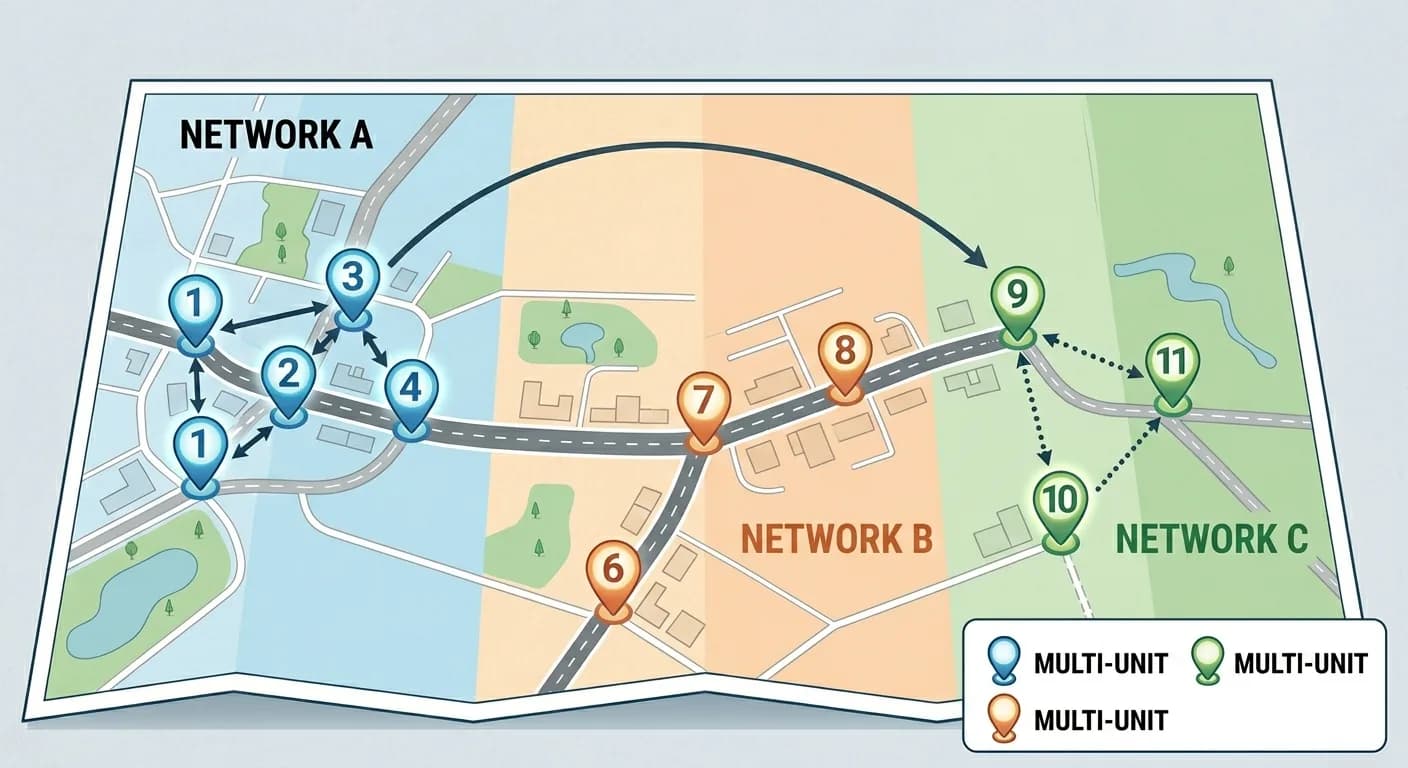
A multi-unit resale uses the same principles with extra layers. Buyers judge individual site performance, group overheads and shared services, area management strength, and lease terms across all locations. Multi-unit deals usually attract experienced operators, regional developers, family offices, or investment groups who expect a consolidated financial pack showing profit and loss by site, central costs, head office support charges, and any upcoming capex like refits, new vans, or IT systems.
Franchisors often apply stricter checks to multi-unit buyers because a poor operator affects several territories at once. Expect longer approval timelines, higher transfer fees, and conditions about further openings or refurbishments. A broker with multi-unit experience, plus early talks with the franchisor, will save you a lot of friction.
Stakeholders and Routes to Finding a Buyer
The main stakeholders when selling a UK franchise are your franchisor (controls who joins the network), a franchise solicitor (interprets the agreement, drafts contracts, protects you against ongoing liability), an accountant or tax adviser (prepares the accounts pack and models sale structures), and a franchise broker (markets the business, filters buyers, supports negotiations).
A specialist franchise solicitor understands transfer clauses, non-compete rules, and the standard documents many networks use. A general commercial lawyer may miss details that affect you for years after completion.
You then choose your route to a buyer. The main options:
| Buyer Route | Best Situation | Main Risk |
|---|---|---|
| Third-party resale | Profitable single unit with strong reputation in cities like Bristol or Glasgow | Time needed to find the right buyer and bank funding |
| Family or management buy-out | Trusted staff or children already active in the business | They may lack capital and request vendor finance |
| Sale back to franchisor | When the brand wants your territory as a company-owned site | Franchisor may seek a lower price than open market |
| Listing on platforms | When you want wide exposure to career changers and investors | Quality of enquiries depends on the platform and advert |
| Liquidation and closure | Loss-making with no buyer interest | Early exit costs and goodwill written off |
Practical Negotiation Tips
Once buyers show interest, a few practical points help protect value:
- Treat the first offer as a starting point, not a final figure.
- Focus on the whole deal: price, payment timing, earn-outs, handover period, and any consultancy work.
- Ask your broker or solicitor to draft clear Heads of Terms before lawyers start detailed work.
- Avoid making big concessions without asking for something in return, such as a faster completion date or fewer post-sale obligations.
- Keep performance steady. Falling sales during talks invite buyers to chip away at the price.
Many owners in their 50s and 60s prefer their adviser to lead early price discussions to keep emotion out of the process.
Legal, Financial, and Tax Considerations

Legal, financial, and tax issues all flow from your franchise agreement and wider UK law. Before you market the business, your solicitor should revisit the agreement, this time from a seller's point of view. Most agreements require formal franchisor consent, a written transfer agreement (often using the franchisor's template), and payment of approval or transfer fees, sometimes with a commission if the franchisor introduces the buyer.
From a tax perspective, early advice is extremely valuable. Key points include whether the sale is structured as an asset sale (selling equipment, stock, and goodwill) or a share sale (selling shares in a limited company), how much of the price is taxed as capital gain versus income, and whether you qualify for Business Asset Disposal Relief (BADR).
According to HMRC, BADR can reduce Capital Gains Tax on qualifying business sales to 10%, up to a lifetime limit of £1 million. A chartered tax adviser or a member of the Institute of Chartered Accountants in England and Wales can explain how this applies to your franchise sale.
Common pitfalls include agreeing Heads of Terms without checking early exit fees or non-compete clauses, forgetting to obtain landlord consent for lease assignments, misunderstanding VAT treatment, and overstating performance figures, which can lead to disputes after completion. A short planning meeting with your solicitor and accountant before you start marketing saves a lot of cost and stress later.
The Four Phases of a Successful UK Franchise Sale
The four phases of a UK franchise sale turn an idea of retirement into a step-by-step plan.
Review and preparation
You and your solicitor go through the franchise agreement to identify transfer rules, early exit costs, non-competes, and any requirement to refurbish. Choose a target exit window (usually three to five years ahead), check lease and franchise renewal dates, and fix obvious compliance, HR, and Companies House issues.
Valuation and market readiness
Your accountant prepares three years of accounts, normalises profit, and helps set a realistic asking price plus minimum acceptable figure. A broker prepares a sale prospectus covering headline financials, owner earnings, staff structure, premises, territory, competition, and franchisor support.
Adverts go live across suitable channels (Franchise Hunt, Franchise Direct, LinkedIn) with enough detail to filter casual enquiries without naming staff or customers.
Sourcing buyers, qualifying, negotiating
You and your broker speak with potential buyers, check funding, and assess whether they will pass franchisor approval. Shortlisted buyers then meet the franchisor's recruitment team. Compare offers on payment structure and handover, agree Heads of Terms in writing, and keep at least one alternative buyer engaged so you are not dependent on a single deal.
Due diligence, completion, and transition
The buyer's team reviews contracts, VAT records, payroll, leases, and supplier issues through a shared data room. Your solicitor and the franchisor's lawyer agree the final transfer agreement. On completion day funds move via solicitors' client accounts, direct debits and payroll switch to the buyer, and warranties and any consultancy agreements come into effect.
A planned transition period is especially valuable for service or relationship-based businesses. Many sellers agree a few weeks or months of part-time support, paid or included in the price, to train the new owner and reassure staff.
The Bottom Line on Planning Your UK Franchise Exit

A strong UK franchise exit strategy is less about clever timing and more about steady preparation. When you plan ahead, keep standards high, and maintain clean financial records, you give buyers, banks, and your franchisor clear reasons to support your sale. Research on household wealth distribution in Britain underscores why turning business equity into realised capital at the right time matters so much for retirement security.
Common pitfalls to avoid include leaving planning until the last 6 to 12 months before retirement, allowing sales or service levels to slide once you decide to sell, ignoring non-compete or early exit clauses until a buyer is on the hook, relying on verbal assurances instead of written agreements, and overstating profits or hiding issues that due diligence will expose.
You cannot control every twist in life, but you can control how sale-ready your franchise looks at any given point. A clean, profitable, well-staffed operation in a reasonable location usually attracts interest, even in slower markets.
A practical first step is to read your franchise agreement with a specialist adviser, then sketch a three to five year exit window. From there you can speak with brokers and list your brand on focused platforms that connect you with serious UK buyers already looking for proven franchise opportunities.
Frequently Asked Questions
How long does it take to sell a franchise in the UK?
It usually takes between 18 months and three years to sell a UK franchise from first planning to completion. The time depends on your asking price, how strong the business looks, buyer funding, and how quickly your franchisor can approve the new owner. Multi-unit or higher-value resales can take longer, so early planning is wise.
Does my franchisor have to approve the sale of my franchise?
Yes. Almost every UK franchise agreement requires franchisor approval before a sale. The buyer must meet the franchisor's financial standards, complete initial training, and fit the brand culture before the licence can transfer. Involve the franchisor early so they feel part of the process rather than presented with a last-minute decision.
What is Business Asset Disposal Relief and does it apply to franchise sales?
Business Asset Disposal Relief (BADR) is a UK tax relief that can reduce Capital Gains Tax on qualifying business sales to 10%. It can apply to franchise resales, but rules are strict, so ask a UK tax adviser or check HMRC. Planning the sale structure with BADR in mind can make a substantial difference to your net proceeds.
What do buyers look for when purchasing a franchise resale?
Buyers look for stable and growing profits, clear and accurate accounts, a business that runs well without the current owner, trained staff and low staff turnover, strong Google reviews and local reputation, and evidence of support and training from a respected franchisor. In short, they pay for reliable future earnings, not just past turnover.
Can I sell my franchise before my agreement term ends?
Often yes, but the process can be more involved. Early exits may trigger extra fees or payment of some future royalties, and the franchisor will still need to approve the buyer. Ask a franchise solicitor to review your agreement and speak with your franchisor before you start marketing so you understand the financial and legal impact of an early sale.